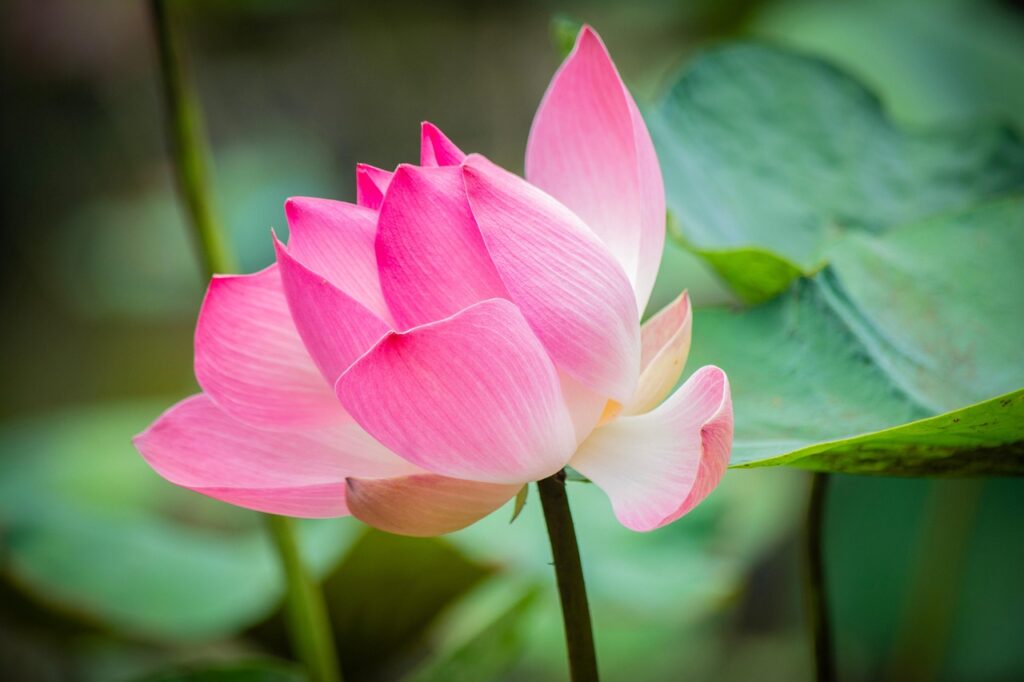
Across centuries and civilizations, the lotus has carried the fragrance of the divine. In the mystic traditions of India, Egypt, and the East, it is a living symbol of awakening — a flower that rises from the depths of water to meet the light. In Hinduism, the lotus (Padma) rests beneath the feet of gods and goddesses, signifying purity and transcendence amid the world’s illusion. In Buddhism, it unfolds petal by petal toward enlightenment, teaching that wisdom emerges from the very soil of suffering. The ancient Egyptians saw in it the promise of rebirth, as the lotus closed each night and reopened with the dawn. Across all these stories, one truth glimmers: the lotus reminds us that light is not found in escaping the dark, but in rising through it.
Each color of the lotus carries its own vibration, a subtle whisper of the lessons it holds. The white lotus speaks of spiritual perfection and the clarity of a mind unclouded by desire. The pink lotus, most sacred in Buddhist tradition, represents the unfolding of the highest heart — the awakening of compassion and divine love. The blue lotus symbolizes wisdom and the victory of spirit over the senses, often depicted in ancient Egyptian art as the flower of transcendence. The red lotus mirrors the pulse of life itself — love, vitality, and the fire of devotion. And the purple lotus, rare and luminous, embodies mystical insight, inviting us to explore the mysteries beyond form and thought. Together, these colors remind us that awakening wears many hues, and every path to light is unique.
There is a quiet wisdom in the lotus — a flower that ascends from the murky depths and unfolds, untouched by the mud that cradled its roots. It is a reminder that stillness is not the absence of growth, but the soil from which awakening blooms.
In many ancient teachings, the lotus’s purity does not come from separation; it comes from transformation. The mud that others might reject becomes the very foundation for its beauty. The lotus teaches us that every experience — even the dark, heavy ones — can nourish the soul if we are willing to sit with them, patiently and without resistance.
Stillness is where the transformation begins.
It is not a passive quiet, but an active listening — a turning inward to meet the pulse of your own being. In stillness, the noise of striving fades, and something softer begins to whisper: a truth that you are not broken, not behind, not lost — simply unfolding in your own divine timing.
The world celebrates movement, but the lotus reminds us that real growth often happens beneath the surface. When we rest, when we breathe, when we surrender to the moment, unseen roots deepen, unseen petals form. The miracle of becoming is not always visible, but it is always occurring.
Perhaps the lotus blooms not because it fought its way upward, but because it trusted the light enough to rise.
Let this be your practice:
To honor the mud as much as the bloom.
To find grace in stillness.
To trust that every pause holds the quiet work of transformation.
You are already growing — even when you feel still.